Showing posts with label Health and Psych. Show all posts

Wednesday, February 9, 2011

Life: Everyone Has Their Own Attitude


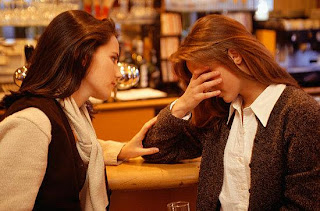
Friends, to be hard to operate, there is a certain degree of artistry required. Not talking about religion, but there is immediate experience. Of a friend, and both male and female friends, not too seriously, otherwise they will feel that much pressure you will be of great importance to the breath pressure, but not too negligent, too negligent, there is probably not in contact. Some friends, if you attach too much importance to him, let him cross you feel very tired the Friends, that is, you attach too much importance to him because, let him feel the pressure, but also will have their own very difficult. Whether it is between friends or between lovers of each other's feelings, certainly not on an equal footing. There will always be a party to pay more, and often are paid more vulnerable party. Therefore, it is a lot of time and at a time when friends would caution myself, want control over their own pay, which would allow themselves and their friends from harm. So I am not going to force other people to try not to put pressure on others to give.

Life, not all people can become friends. Everyone has their own attitude to life, life skills approach and fun-loving character, choose your friends also have their own standards and conditions. My friends on the principle that the pursuit of spiritual communication. I often think that people living in the world, is inseparable from friendship, mutual aid can not be separated, can not do without care, can not do without support. Friends encounter setbacks, if you lend a helping hand, helping each other survive, overcome difficulties and useful than giving more expensive gifts, but also much more reliable. Both as a friend to solve problems means that each bear, joy and common obligations. Only this, always keep the friendship endures.


Friends are often unintentional injury to help but it is true, forget those unintentional injuries; remember who you truly want to help, you will find that you've got a lot of true friends ..... in daily life. Even the best Friends will also have friction and we may separate because of it. But whenever almost midnight, we look to the sky, there will always see the past memories. Trivial memories for my lonely soul tremendous shock! Is this feeling, so I understand the importance of my friends! Network is the same, too close a relationship will become complicated, too far to lose contact, not nearly far just right, can only feel each other's sincerity and friendship. Everyone has their own paradise party, friends, when you're depressed, when you frustrated, when you feel faint when getting friends, please cherish the friend sincere friendship, whether in friendship networks Or in real life, friendship is like the air as water, not to lose the time it was a valuable pain.


Read more...

Monday, February 7, 2011

Stop Being Someone Else And Live Adventurous


Don’t waste your life living someone else’s life. Don’t waste it doing what you think everyone expects you to be doing. Live your own adventure, create your own dreams, make your own goals, and live your life to the fullest. Have courage to follow your passions, stand up for yourself, learn what you want to learn, and be simply amazing by being… you.

In order to live our life to the fullest, we need to have an answer for that question. Write it down, be honest with yourself, don’t hold back, and get it all out. There is a root to every desire, and capturing what we want will tell us a lot about who we are.

How can we ensure we do everything we can to get the most out of our lives?


Live Right


“If you tell the truth you don’t have to remember anything.” ~ Mark Twain

Life is a lot easier when you align yourself with truth than hold on to the baggage that comes with dishonesty and sneaky behaviors. We all have secrets we hide from the world and the less we need to hide, the lighter we feel.

Do you remember the feelings of guilt you had when your parents asked you, “Is there anything you need to tell us?”

I felt FINE if I had nothing to hide, but would typically feel retched; my body temperature would rise and I would stress myself out… ‘HOW CAN THEY POSSIBLY KNOW?!’

I don’t know about you, but I feel much more at peace in my relationships when I have nothing (or, let’s be honest, little) to hide.

*I was a notoriously awful truth-teller. I was the kid who always had the face that said ‘IT WAS ME!’ even when I had no take in the matter. I couldn’t help but give a big mischievous grin when everyone was being serious. I still have the problem today… but usually I’m guilty.

Live Smart


“We must be the change we want to see.” ~ Gandhi

Living smart is recognizing that the world changes when we change ourselves.  We have the power in ourselves to create our own happiness, love, and peace regardless of the situation of the world.

Living smartly means being prepared to jump on opportunities as they come. Not sitting idly by as they zoom past you while you twiddle your thumbs and spend too much time with indecision.  Living smartly is also creating your own opportunities.

Living smart means having a balance in your life.  Knowing when various priorities are impeding on your quality of life, quality of your relationships, or the quality of life of those you love.

Living smart means doing what you know is best (and right).


Live Adventurously


“Life is either a great adventure or nothing.” ~ Helen Keller

Routine is a brain killer. Spice things up a bit and find some adventure. Be spontaneous, do something you wouldn’t normally do, and experience your fears.  Live on the edge a little bit and embrace new challenges.

On a different note, when we treat life as an adventure, we can more easily accept the ups and down and can roll with the punches. When I’m on an adventure, even the difficult situations become part of the exciting story and it evolves into a challenge worth overcoming! You learn something along the way AND the story is that much better. Nobody likes listening to a perfect vacation story, do they?


Live NOT by the Book


“I see my path, but I don’t know where it leads. Not knowing where I’m going is what inspires me to travel it.” ~ Rosalia de Castro

People who are raised in a similar culture typically hold the same beliefs about social norms and life paths.  We have an expectation to fulfill regarding the directions we take in our life, our education, our success, our relationships, etc.

Our need to do what is normal is a feeling that can be broken when we recognize that we are following a path that was set up before us.  Break the mold and live life by your standards and not following a path, instead… make your own.

If you are a world traveler, you know that there is no ‘right’ way to do anything, thus, the definition of ‘right’ becomes what you feel in your heart to be true.

Take the road less traveled (or not traveled at all)!


Know Yourself


We believe knowing, improving, and taking care of ourselves will improve our quality of life, our reality, and the lives of those around us.  To start making positive changes, we must first know who we are and what we represent.


Your Task


For today, take out a piece of paper or open a text editor on your computer, and spend a solid 10 minutes writing down everything you want from your life.  Start every sentence with ‘I want…’.  Anything and everything you can think of (focus on life wants and not things, but there is nothing wrong if you do).  When I did this I came up with over with over 50 unique sentences.

Can you spot any common trends?  Can you group these wants and find the root emotion or attachment to them?  What can you do today to start reaching them?

Have fun with it.


Read more...

Sunday, February 6, 2011

What Does Your Body Language Communicate?


Reading body language is like listening to someone. Our body’s response is an important component of an emotional reaction to any event. If you’ve ever been criticized in public and found your face heated and your heart pounding, you’ve experienced your body’s reaction to shame or humiliation.

Sometimes what you’re feeling is clear and consistent with what you’re saying. You might say “welcome” as you greet a guest with a smile.


But at other times, we mask our emotions from the people around us. There are many reasons to hide how you’re feeling. You don’t want to rock the boat with a new supervisor that you feel is too critical or you don’t want to hurt a friends feelings by letting him know a remark was insensitive. Sometimes you simply want to smooth over social situations.

Even when you don’t communicate your feelings verbally, you may still be imparting information with your body. Arms across you chest the next time you approach that new supervisor?  Looking down when you speak to your friend? These gestures are all important expressions of an emotion.

Try tuning in to what others are communicating with their bodies and see what kind of information you gain. Notice things like eye contact, motions (trembling hands), rate of speech and posture. How does their verbal communication match their body language?

How about you? Try tuning in to your own body. How do you think others perceive you? Are you slumped over in a meeting? Is that consistent with how you feel? Is it how you want to feel?


Body language communication is a two way street. It projects outward, communicating to others what you’re feeling, but it also has an impact on your internal emotional state. Changing your body and posture can have an impact on how you feel. Sit up in that meeting and you might find yourself more alert and engaged. Uncross your arms and you might find yourself more open to your new supervisor. Take a few deep breaths and you might find yourself less anxious.

The body and your body language is a great resource to tap into, especially if concealing how you feel has become habitual for you. Over time, if you become practiced at hiding your feelings, you may begin to hide them from yourself, as well. You can lose contact with how you actually feel in different situations. People who have experienced abuse often become quite good at masking how they feel.  However the consequence can be losing contact with your own emotions.


How Can You Read What People Think?

A single word, by itself, has many possible meanings. In the dictionary, you'll find several likely meanings for each word.

To know the correct meaning, you simply look at:
- other words in the same sentence and
- the context of the sentence.

Reading body language is as simple. A body language signal by itself can mean many things.

To know which meaning is correct, you need to look at:
- other signals that could have the same meaning (at least 2 or 3) and
- the context of the situation (environment and conversation).

This is the golden rule of reading body language.

Here is some common examples of body language and the emotion it is conveying:

Body Language: Eye contact, mutual gaze  Emotion:  Caring, love, affection.

Body Language: Smiling, jumping, talkative,  Emotion Joy, excitement, happiness.

Body Language: Red flushed face, clenched hands, looking down, withdrawal, teeth clamping, frowning, invading other people’s space, Emotion Anger, dislike, annoyance.

Body Language: Frowning, looking down, slumped posture, low, quiet monotonous voice, Emotion Sadness, hurt, unhappiness.

Body Language: Nervous talk, crying, fidgeting, speech errors, shakiness, speechlessness, freezing, Emotion anxiety, nervousness, fear.

Body Language: Covering face, hiding, slumping, eyes down, darting eyes, Emotion shame, embarrassment, regret.


Read more...

Tuesday, January 25, 2011

Smoking Puts DNA At Risk In 15 Minutes


Here's another reason to kick the habit: within minutes of inhaling, regular smokers produce chemicals that cause genetic damage linked with cancer.

Polycyclic aromatic hydrocarbons (PAHs) present in tobacco smoke are one of the main culprits behind lung cancer. In the body they form metabolites that react readily with DNA to produce mutations that in turn can cause tumours.

Stephen Hecht and colleagues at the University of Minnesota in Minneapolis asked 12 volunteers with a history of smoking to smoke a cigarette laced with phenanthrene, a type of PAH that binds with DNA but is non-carcinogenic.

By collecting blood samples before, during and after smoking, the team were able to track the concentrations of phenanthrene metabolites and determine the speed at which they formed in the body.

The concentration of metabolites reached a peak around 15 to 30 minutes after smoke inhalation before tailing off, suggesting that cigarette smoke could potentially begin to affect genes within minutes of smoking beginning 

(Chemical Research in Toxicology)


Read more...

Saturday, January 15, 2011

7 Good Reasons To Cry Your Eyes Out


New York Times reporter Benedict Carey referred to tears in a recent piece as “emotional perspiration.” Given that I sweat a lot and hate deodorant, I suppose it makes sense that I weep often. But I’m not going to apologize for that, because after a good cry, I always feel cleansed, like my heart and mind just rubbed each other’s backs in a warm bath. 

In his intriguing article, “The Miracle of Tears” , from which I’ve lifted some of the research for this post, author Jerry Bergman writes: “Tears are just one of many miracles which work so well that we taken them for granted every day.” Here, then, are seven ways tears and the phenomenon we call “crying” heal us physiologically, psychologically, and spiritually.

1. Tears help us see.

Starting with the most basic function of tears, they enable us to see. Literally. Tears not only lubricate our eyeballs and eyelids, they also prevent dehydration of our various mucous membranes. No lubrication, no eyesight. Writes Bergman: “Without tears, life would be drastically different for humans–in the short run enormously uncomfortable, and in the long run eyesight would be blocked out altogether.”

2. Tears kill bacteria.

No need for Clorox wipes. We’ve got tears! Our own antibacterial and antiviral agent working for us, fighting off all the germs we pick up on community computers, shopping carts, public sinks, and all those places the nasty little guys make their homes and procreate. Tears contain lysozyme, a fluid that the germaphobic dreams about in her sleep, because it can kill 90 to 95 percent of all bacteria in just five to 10 minutes! Which translates, I’m guessing, to three months’ worth of colds and stomach viruses. 

3. Tears remove toxins.

Biochemist William Frey, who has been researching tears for as long as I’ve been searching for sanity, found in one study that emotional tears–those formed in distress or grief–contained more toxic byproducts than tears of irritation (think onion peeling). Are tears toxic then? No! They actually remove toxins from our body that build up courtesy of stress. They are like a natural therapy or massage session, but they cost a lot less!

4. Crying can elevate mood.

Do you know what your manganese level is? No, neither do I. But chances are that you will feel better if it’s lower because overexposure to manganese can cause bad stuff: anxiety, nervousness, irritability, fatigue, aggression, emotional disturbance and the rest of the feelings that live inside my happy head rent-free. The act of crying can lower a person’s manganese level. And just like with the toxins I mentioned in my last point, emotional tears contain 24 percent higher albumin protein concentration–responsible for transporting many small molecules (which has to be a good thing, right?)–than irritation tears.

5. Crying lowers stress.

Tears really are like perspiration in that exercising and crying both relieve stress. For real. In his article, Bergman explains that tears remove some of the chemicals built up in the body from stress, like the endorphin leucine-enkaphalin and prolactin, the hormone I overproduce because of my pituitary tumor that affects my mood and stress tolerance. The opposite is true too. Bergman writes, “Suppressing tears increases stress levels, and contributes to diseases aggravated by stress, such as high blood pressure, heart problems, and peptic ulcers.”

6. Tears build community.

In her “Science Digest” article, writer Ashley Montagu argued that crying not only contributes to good health, but it also builds community. I know what you’re thinking: “Well, yeah, but not the right kind of community. I mean, I might ask the woman bawling her eyes out behind me in church what’s wrong or if I can help her, but I’m certainly not going to invite her to dinner.” I beg to differ. As a prolific crier, especially on video, I always come away astounded by the comments … the resounding support of people I don’t know all that well, and the level of intimacy exchanged among them. Read for yourselves some of the comments on both my self-esteem video and my recent death and dying video and you’ll appreciate my point. Tears help communication and foster community.

7. Tears release feelings.

Even if you haven’t just been through something traumatic or are severely depressed, the average Joe goes through his day accumulating conflicts and resentments. Sometimes they gather inside the limbic system of the brain and in certain corners of the heart. Crying is cathartic. It lets the devils out before they wreak all kind of havoc with the nervous and cardiovascular systems. Writes John Bradshaw in his bestseller “Home Coming”: “All these feelings need to be felt. We need to stomp and storm; to sob and cry; to perspire and tremble.”


Read more...

Monday, January 10, 2011

Health: 5 Things You Must Know About Sleep

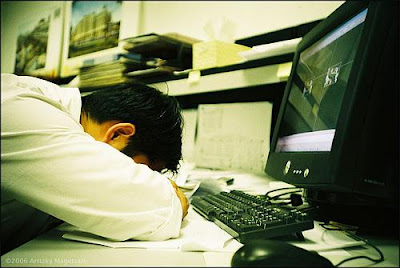
You're tired. You could put your head down on a desk right now and fall asleep immediately. You went to bed late last night, had trouble falling asleep and woke up too early. And let's not kid ourselves: Tonight will be the same unless ... well, read on.

This is the classic not-so-shut-eye experience of many people who think they are sleep-deprived and possibly need pills or other treatment to fix their insomnia, teeth grinding, jet lag, restless or jerky legs, snoring, sleepwalking and so forth.

Reality is quite different.

For instance, insomnia is said to be the most common sleep disorder, but these dissatisfying sleep experiences only get in the way of daily activities for 10 percent of us, according to the National Institutes of Health. And in almost half of those cases, the real underlying problem is illness (often mental) or the effects of a substance, like coffee or medication.

Here are five recent findings that might help you rest easier:


1. We sleep better than we think we do

For most of us, sleep deprivation is a myth. We're not zombies. The non-profit National Sleep Foundation (which takes money from the sleep-aid industry, including drug companies that make sleeping pills) says the average U.S. resident gets 7 hours a night and that's not enough, but a University of Maryland study earlier this year shows we typically get 8 hours and are doing fine. In fact, Americans get just as much sleep nowadays as they did 40 years ago, the study found.


2. We need less sleep as we age

We'll die without sleep. The details are sketchy, but research suggests it's a time when we restore vital biological processes and also sort and cement memories. Last year, the World Health Organization determined that nightshift work, which can lead to sleep troubles, is a probable human carcinogen. On the upside, the latest research suggests we need less of it as we get older.


3. You can sleep like a baby (or Thomas Edison)

Multiple, shorter sleep sessions nightly, rather than one long one, are an option. So-called polyphasic sleep is seen in babies, the elderly and other animals (and Thomas Edison reportedly slept this way). For the rest of us, it is more realistic and healthy to sleep at night as best we can and then take naps as needed. EEGs show that we are biphasic sleepers with two alertness dips — one at night time and one mid-day. So talk to HR about setting up a nap room, like they have for NASA's Phoenix mission team members.


4. Animals exhibit a range of sleep habits

The three-toed sloth sleeps 9.6 hours nightly. But newborn dolphins and killer whales can forgot sleeping for their entire first month. However, the latter extreme is not recommended for humans. We grow irritable and lose our ability to focus and make decisions after even one night of missed sleep, and that can lead to serious accidents driving and using other machinery.


5. Get used to being tired, hit the desk

The bottom line is that a good night's sleep is within the reach of most of us if we follow common-sense guidelines for sleep hygiene: 
  • Go to bed at the same time nightly.
  • Set aside enough time to hit that golden 7 hours of sleep.
  • Refrain from caffeine, heavy or spicy foods, and alcohol and other optional medications that might keep you awake, four to six hours before bed-time.
  • Have a pre-sleep routine so you wind down before you hop in.
  • Block out distracting lights and noises.
  • Only engage in sleep and sex in bed (no TV-watching, reading or eating).
  • Exercise regularly but not right before bed.
But you already know all this and you don't do it. So your realistic plan might be to surrender to the mid-day desk nap. 


Read more...

Wednesday, January 5, 2011

God's Pharmacy is Amazing!!!

A friend send this to me. It's been said that God first separated the salt water from the fresh, made dry land, planted a garden, made animal and fish...all before making a human. He made and provided what we'd need before we were born. These are best and more powerful when eaten raw. We're such a slow learners...

God left us a clue as to what foods help what part of our body!

A slice Carrot looks like the human eye. The pupil, iris and radiating lines look just like the human eye...and YES, science now show carrots greatly enhance blood flow to and function of the eyes.

A tomato has four chambers and is red. The heart has four chambers and is red. All of research shows tomatoes are loaded with lycopine and are indeed pure heart and blood food.

Grapes hang in a cluster that has the shape of the heart. Each grape looks like a blood cell and all of the research today shows grapes are also profound heart and blood vitalizing food.

A walnut looks like a little brain, a left and right hemisphere, upper cerebrums and lower cerebellums. Even the wrinkles or folds on the nut are just like the neo-cortex. We now know walnuts help develop more than three dozen neuron-transmitters for brain function.

Kidney beans actually heal and help maintain kidney function and yes, they looks like human kidneys.

Celery, bok choy, and rhubarb and many more look just like bones. These food specifically target bone strength. Bone are 23% sodium and these foods are 23% sodium. If you don't have enoughsodium in your diet, the body pulls it from the bones, thus making them weak. These foods replenish the skeletal needs of the body.

Avocados, eggplant and pears target the health and function of the womb and cervix of the females - they look just like these organs. Today's research shows that when a woman eats one avocado a week, it balances hormones, sheds unwanted birth weight, and prevents cervical cancers. And how profound is this? It takes exactly nine months to grow an avocado from blossom to ripened fruit. There are over 14, 000 photolytic chemical constituents of nutrition in each one of these foods (modern science has only studied and named about 141 of them).

Figs are full of seedsand hang in twos when they grow. Figs increase the mobility of male sperm and increase the numbers of sperm as well to overcome male sterility.

Sweet potatoes look like the pancreas and actually balance the glycemic index of diabetics.

Olives assist the healh and the function of the ovaries.

Oranges, grapefruits and other citrus fruits look just like the mammary glands of the female and actually assist the health of the breasts and the movement of lymph in and out of the breasts.

Onions look like the body cells. Today's research shows onion help clear waste materials from all of the body cells. They even produce tears which wash the epithelial layers of the eyes. A working companion, garlic also helps eliminate waste materials and dangerous free radicals from the body.


Read more...